Gathering
Gathering professions take materials from the world with a tool in your backpack: you do not need to equip it, and if you have several, the best one you can use is picked. Your profession level unlocks better materials, and it rises by gathering the ones that still challenge you. Every account starts with the basic tool of each one in its stash: move it to your backpack to use it, because the stash does not count.
Skill
Skill rises by gathering what still challenges you. Each material teaches according to the level it asks for, and one far enough below yours gives only the minimum: there is no grinding the easy one, you have to move up the ladder.
| Skill | Amount |
|---|---|
| 10 | 179 |
| 25 | 1,121 |
| 40 | 5,009 |
| 60 | 17,405 |
MiningBasic pickaxe
This is how each one goes down as you work it: full, half, low and spent, until it comes back.

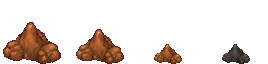






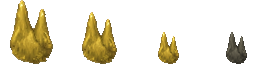

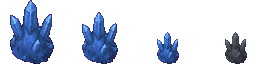

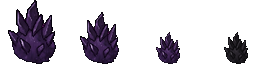


When mining, 1% of every ore also brings an uncut gem, at no extra energy; the deeper the vein, the better the gem. The gems column shows the chance per ore. They are cut in Artisanry and socketed into weapons and chest pieces. Sockets
When night falls, each vein glows faintly in the color of its ore, so you can find them even in the dark. A depleted vein does not glow: it stays dark until it comes back.
If you would rather have your character work alone for a while, ask its Master for Toil.
Mining Cape: once Mining reaches level 100, Dunstan, foreman gives it to you through the quest Mastery: Mining. Only masters wear it: it cannot be traded, sold or salvaged.
| Tool | Level | Where it comes from |
|---|---|---|
| Basic pickaxe | 0 | Shop |
| Bronze pickaxe | 0 | Forge Smithing 0 |
| Iron pickaxe | 0 | Forge Smithing 15 |
| Silver pickaxe | 0 | Forge Smithing 20 |
| Steel pickaxe | 0 | Forge Smithing 30 |
| Gold pickaxe | 0 | Forge Smithing 40 |
| Mithril pickaxe | 0 | Forge Smithing 50 |
| Obsidian pickaxe | 0 | Forge Smithing 70 |
| Dragon pickaxe | 0 | Forge Smithing 85 |
| Name | Skill | Hits | Respawn | Yield | Uncut gems | Gathered at |
|---|---|---|---|---|---|---|
| Copper | 0 | 6 | 5–8 s | ×3 | 0.7%0.3% | 16 |
| Tin | 0 | 6 | 5–8 s | ×3 | 0.7%0.3% | 16 |
| Iron | 15 | 9 | 8–12 s | ×2 | 0.7%0.3% | 12 |
| Silver | 20 | 9 | 12–20 s | ×3 | 0.7%0.3% | 12 |
| Coal | 30 | 12 | 20–35 s | ×2 | 0.35%0.35%0.25%0.05% | 20 |
| Gold | 40 | 12 | 35–60 s | ×2 | 0.35%0.35%0.25%0.05% | 8 |
| Mithril | 55 | 15 | 60–100 s | ×2 | 0.2%0.35%0.3%0.15% | 8 |
| Obsidian | 70 | 15 | 100–160 s | ×1 | 0.15%0.3%0.3%0.22%0.03% | 4 |
| Dragon | 85 | 15 | 160–240 s | ×1 | 0.15%0.3%0.3%0.22%0.03% | 4 |
| Quests | Level | What it asks |
|---|---|---|
| Mastery: Mining one-time | 1 | Mining level 100 |
| First ore one-time | 3 | Gather: Copper ×5 Bring: Copper ×5 |
| Mine shift daily | 1 | Gather: Mining ×20 |
| Copper order daily | 1 | Bring: Copper ×10 |
WoodcuttingBasic axe
Woodcutting is slower: each strike on a tree takes 30% longer than on a vein or a fishing spot, and trees take 30% longer to come back. Wood is the hardest thing to gather.
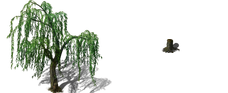
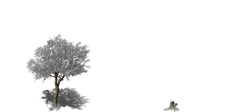
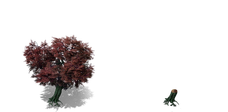
This is how each tree looks: standing and, once felled, the cut stump until it grows back.
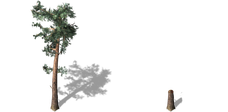
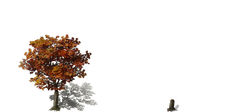
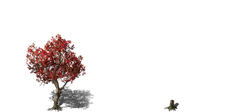
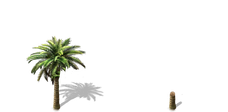
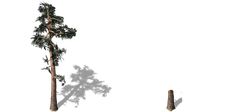
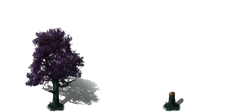
If you would rather have your character work alone for a while, ask its Master for Toil.
Woodcutting Cape: once Woodcutting reaches level 100, Rowan, sawyer gives it to you through the quest Mastery: Woodcutting. Only masters wear it: it cannot be traded, sold or salvaged.
| Tool | Level | Where it comes from |
|---|---|---|
| Basic axe | 0 | Shop |
| Bronze axe | 0 | Forge Smithing 0 |
| Iron axe | 0 | Forge Smithing 15 |
| Silver axe | 0 | Forge Smithing 20 |
| Steel axe | 0 | Forge Smithing 30 |
| Gold axe | 0 | Forge Smithing 40 |
| Mithril axe | 0 | Forge Smithing 50 |
| Obsidian axe | 0 | Forge Smithing 70 |
| Dragon axe | 0 | Forge Smithing 85 |
| Name | Skill | Hits | Respawn | Yield | Gathered at |
|---|---|---|---|---|---|
| Pine log | 0 | 6 | 7–10 s | ×3 | 15 |
| Oak log | 15 | 9 | 10–16 s | ×3 | 10 |
| Willow log | 30 | 9 | 16–26 s | ×3 | 8 |
| Birch log | 35 | 9 | 16–26 s | ×2 | 8 |
| Maple log | 45 | 12 | 26–46 s | ×2 | 7 |
| Mahogany log | 50 | 12 | 46–78 s | ×2 | 6 |
| Yew log | 60 | 15 | 78–130 s | ×1 | 5 |
| Arcane log | 75 | 15 | 130–208 s | ×1 | 5 |
| Sequoia log | 90 | 15 | 208–312 s | ×1 | 5 |
| Quests | Level | What it asks |
|---|---|---|
| Mastery: Woodcutting one-time | 1 | Woodcutting level 100 |
| Asking Permission one-time | 30 | Gather: Herbalism ×30 Gather: Woodcutting ×30 |
| Firewood for winter daily | 1 | Gather: Woodcutting ×20 |
| Pine order daily | 1 | Bring: Pine log ×10 |
| Camp daily | 1 | Defeat Beast-type enemies ×8 Gather: Woodcutting ×8 |
FishingSmall net
This is how each one goes down as you work it: full, half, low and spent, until it comes back.


If you would rather have your character work alone for a while, ask its Master for Toil.
Fishing Cape: once Fishing reaches level 100, Grandpa Ned gives it to you through the quest Mastery: Fishing. Only masters wear it: it cannot be traded, sold or salvaged.
| Tool | Level | Where it comes from |
|---|---|---|
| Fishing rod | 0 | Forge Carpentry 0 |
| Small net | 0 | Shop |
| Fly rod | 0 | Forge Carpentry 15 |
| Crab trap | 0 | Forge Carpentry 35 |
| Big net | 0 | Forge Carpentry 50 |
| Big-game rod | 0 | Forge Smithing 15 |
| Fishing crossbow | 0 | Forge Smithing 50 |
| Obsidian harpoon | 0 | Forge Smithing 70 |
| Dragon harpoon | 0 | Forge Smithing 85 |
| Name | Skill | Hits | Respawn | Yield | Gathered at |
|---|---|---|---|---|---|
| Shrimp | 0 | 6 | 8–12 s | ×3 | 15 |
| Sardine | 5 | 6 | 8–12 s | ×3 | 10 |
| Trout | 20 | 6 | 8–12 s | ×3 | 9 |
| Salmon | 30 | 6 | 8–12 s | ×2 | 8 |
| Tuna | 35 | 9 | 12–19 s | ×2 | 7 |
| Crab | 40 | 6 | 8–12 s | ×2 | 6 |
| Red snapper | 46 | 6 | 8–12 s | ×2 | 5 |
| Swordfish | 50 | 9 | 19–31 s | ×1 | 5 |
| Abyssal fish | 80 | 12 | 31–54 s | ×1 | 5 |
| Quests | Level | What it asks |
|---|---|---|
| Mastery: Fishing one-time | 1 | Fishing level 100 |
| The Shadow’s Skin one-time | 20 | Gather: Herbalism ×15 Gather: Fishing ×10 |
| Fishing day daily | 1 | Gather: Fishing ×15 |
HerbalismPruning shears
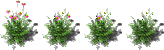
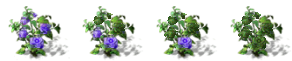
This is how each one goes down as you work it: full, half, low and spent, until it comes back.













If you would rather have your character work alone for a while, ask its Master for Toil.
Herbalism Cape: once Herbalism reaches level 100, Aunt Romina gives it to you through the quest Mastery: Herbalism. Only masters wear it: it cannot be traded, sold or salvaged.
| Tool | Level | Where it comes from |
|---|---|---|
| Pruning shears | 0 | Shop |
| Dragon shears | 0 | Forge Smithing 85 |
| Bronze shears | 0 | Forge Smithing 0 |
| Iron shears | 0 | Forge Smithing 15 |
| Silver shears | 0 | Forge Smithing 20 |
| Steel shears | 0 | Forge Smithing 30 |
| Gold shears | 0 | Forge Smithing 40 |
| Mithril shears | 0 | Forge Smithing 50 |
| Obsidian shears | 0 | Forge Smithing 70 |
| Name | Skill | Hits | Respawn | Yield | Gathered at |
|---|---|---|---|---|---|
| Sage | 0 | 6 | 5–8 s | ×3 | 7 |
| Silverlily | 10 | 6 | 5–8 s | ×3 | 7 |
| Emberbloom | 15 | 9 | 8–12 s | ×3 | 7 |
| Mandrake | 25 | 9 | 12–20 s | ×2 | 7 |
| Dewbell | 35 | 12 | 20–35 s | ×2 | 7 |
| Moonflower | 45 | 12 | 35–60 s | ×2 | 7 |
| Duskrose | 55 | 15 | 60–100 s | ×2 | 7 |
| Bloodroot | 70 | 15 | 100–160 s | ×1 | 7 |
| Dragoncrown | 85 | 15 | 160–240 s | ×1 | 7 |
| Quests | Level | What it asks |
|---|---|---|
| Mastery: Herbalism one-time | 1 | Herbalism level 100 |
| The Shadow’s Skin one-time | 20 | Gather: Herbalism ×15 Gather: Fishing ×10 |
| Asking Permission one-time | 30 | Gather: Herbalism ×30 Gather: Woodcutting ×30 |
| Ash and Oil one-time | 34 | Finish: The Wailing Graveyard Bring: Dewbell ×10 |
| Moss and Ash one-time | 41 | Gather: Herbalism ×20 Craft: Alchemy ×5 |
| Herb day daily | 1 | Gather: Herbalism ×15 |
Herbalism
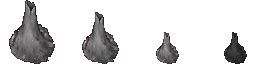
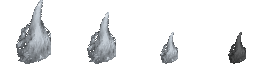
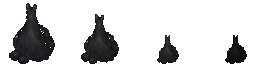
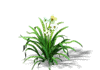
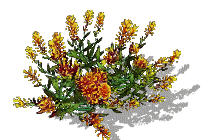
Herbalism is cut with pruning shears, strike by strike, like a vein: each bush has three stages and grows back after a while. Only these nine bushes can be cut; every other plant in the world is decoration.



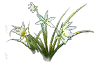


Where each one grows
There are 7 bushes per herb, in small groups so you can move between them while the others grow back. Low herbs grow near the city; high ones, in distant or dangerous areas.
The basic shears are bought; the blacksmith forges a pair for each metal. Any pair cuts any herb of your level: better ones just cut faster, and the dragon shears 50% faster. Toil is different: there each herb asks for shears of its own tier.
| Shears | Where from | Pace |
|---|---|---|
| Pruning shears | Shop 2 | Normal |
| Bronze shears | Forge Smithing 0 · Bronze bar ×1 Handle ×1 | +4 % |
| Iron shears | Forge Smithing 15 · Iron bar ×1 Handle ×1 | +9 % |
| Silver shears | Forge Smithing 20 · Silver bar ×2 Handle ×1 | +14 % |
| Steel shears | Forge Smithing 30 · Steel bar ×2 Handle ×1 | +19 % |
| Gold shears | Forge Smithing 40 · Gold bar ×2 Handle ×1 | +25 % |
| Mithril shears | Forge Smithing 50 · Mithril bar ×3 Handle ×1 | +32 % |
| Obsidian shears | Forge Smithing 70 · Obsidian bar ×3 Handle ×1 | +39 % |
| Dragon shears | Forge Smithing 85 · Dragon bar ×4 Handle ×1 | +50 % |
Some gear will be able to cut faster (up to 30%) or give double herbs (up to 25% per stage). There is none yet: the Professions window already shows how much your gear adds.
SkinningSkinning knife
If you would rather have your character work alone for a while, ask its Master for Toil.
Skinning Cape: once Skinning reaches level 100, Sven, hunter gives it to you through the quest Mastery: Skinning. Only masters wear it: it cannot be traded, sold or salvaged.
| Tool | Level | Where it comes from |
|---|---|---|
| Skinning knife | 0 | Shop |
| Bronze knife | 0 | Forge Smithing 0 |
| Iron knife | 0 | Forge Smithing 15 |
| Steel knife | 0 | Forge Smithing 30 |
| Mithril knife | 0 | Forge Smithing 50 |
| Obsidian knife | 0 | Forge Smithing 70 |
| Dragon knife | 0 | Forge Smithing 85 |
| Name | Skill | Yield | Gathered at |
|---|---|---|---|
| Game hide | 0 | ×1 | — |
| Beast hide | 15 | ×1 | — |
| Serpent hide | 30 | ×1 | — |
| Leviathan hide | 45 | ×1 | — |
| Frost hide | 55 | ×1 | — |
| Infernal hide | 65 | ×1 | — |
| Dragon scale | 75 | ×1 | — |
| Quests | Level | What it asks |
|---|---|---|
| Mastery: Skinning one-time | 1 | Skinning level 100 |
Hides
Hides do not come from any spot on the map: the animals you defeat in adventures and dungeons leave them, like meat. Then they are tanned at the artisan table.
- A knife in your backpack, any of them: every knife cuts every hide of your level (not in Toil: there each hide asks for a knife of its own tier). You do not need to equip it: your hand keeps the weapon. The shop one, Skinning knife, comes in the starting kit; the others are forged at Smithing and each bar gives a little more Skinning experience (4% per tier). The Dragon knife is the big jump: 50% more.
- The Skinning level each hide asks for. If the knife or the level is missing, the creature leaves no hide and the outing result tells you what you lack.
- How many: they come from the outing's budget, just like meat: 0.54 hides per energy point, shared among its creatures (the boss counts for several). Each hide gives Skinning experience.
| Name | Skill | XP | Dropped by | Where they fight | Tanned into |
|---|---|---|---|---|---|
| Game hide | Skinning 0 | 8 | Wolf Level 1, Fox Level 2 | The Pinewood | Light leather |
| Beast hide | Skinning 15 | 31 | Werewolf Level 18, Gorilla Level 21, Tiger Level 22, Jungle Werewolf Level 24 | The Darkwood·The Deep Jungle·The Witch Marsh | Thick leather |
| Serpent hide | Skinning 30 | 53 | Mine Serpent Level 17, Thorn Lizard Level 26, Feathered Sand Serpent Level 30 | The Abandoned Mine·The Red Sands | Scaled leather |
| Leviathan hide | Skinning 45 | 76 | Shark Level 45, Leviathan Level 48, Brown Leviathan Level 48 | The Broken Coast | Hardened leather |
| Frost hide | Skinning 55 | 91 | Snow Wolf Level 50, Yeti Level 53, Festive Yeti Level 54 | The Frozen Vale | Reinforced leather |
| Infernal hide | Skinning 65 | 106 | Hellforged Minotaur Level 54 | The Depths of Inferno | Tempered leather |
| Dragon scale | Skinning 75 | 121 | Kraken Level 49, Green Dragon, Blue Dragon, Red Dragon, Black Dragon, Small Black Dragon | The Broken Coast | Ancient leather |
Butchery
Butchery Cape: once Butchery reaches level 100, Orin, trapper gives it to you through the quest Mastery: Butchery. Only masters wear it: it cannot be traded, sold or salvaged.
| Quests | Level | What it asks |
|---|---|---|
| Mastery: Butchery one-time | 1 | Butchery level 100 |
Meats
Butchery needs no tool and has no spots on the map: it levels on its own while you fight. Every piece of meat the animals you defeat drop teaches you, and the higher your level, the more meat drops.
- Go fight animals: wolves, tigers, serpents, leviathans, yetis, phoenixes. Skeletons, golems and spirits have no meat.
- How much meat: 0.54 pieces per energy point of the outing, shared among its creatures (the boss counts as several). The more animals an outing has, the more meat.
- Your level adds: 1% more meat per Butchery level, up to double at level 100.
- Every piece teaches according to its tier, from game meat to phoenix meat. Meat that fits neither in your backpack nor in your chest does not count.
| Name | XP | Dropped by | Where they fight |
|---|---|---|---|
| Game meat | 8 | Wolf Level 1, Fox Level 2, Hawk Level 4, Turtle Level 5 | The Pinewood |
| Beast meat | 38 | Toad Level 17, Werewolf Level 18, Gorilla Level 21, Tiger Level 22, Jungle Werewolf Level 24, Thorn Lizard Level 26 | The Darkwood·The Deep Jungle·The Witch Marsh·The Red Sands |
| Serpent meat | 53 | Mine Serpent Level 17, Feathered Sand Serpent Level 30 | The Abandoned Mine·The Red Sands |
| Leviathan meat | 76 | Shark Level 45, Brown Leviathan Level 48, Leviathan Level 48, Kraken Level 49 | The Broken Coast |
| Frost meat | 91 | Snow Wolf Level 50, Yeti Level 53, Festive Yeti Level 54 | The Frozen Vale |
| Phoenix meat | 113 | Desert Phoenix Level 29, Inferno Phoenix Level 56 | The Red Sands·The Depths of Inferno |
How much meat drops by level
| Level | Meat |
|---|---|
| 0 | 100% |
| 10 | 110% |
| 25 | 125% |
| 50 | 150% |
| 75 | 175% |
| 100 | 200% |
FarmingSickle
If you would rather have your character work alone for a while, ask its Master for Toil.
Farming Cape: once Farming reaches level 100, Elvira, farmer gives it to you through the quest Mastery: Farming. Only masters wear it: it cannot be traded, sold or salvaged.
| Tool | Level | Where it comes from |
|---|---|---|
| Sickle | 0 | Shop |
| Quests | Level | What it asks |
|---|---|---|
| The first harvest one-time | 1 | Gather: Potato ×10 |
| Mastery: Farming one-time | 1 | Farming level 100 |
| Harvest day daily | 1 | Gather: Farming ×15 |
The garden
Farming has no shared veins or forests: every character has their own plots in the garden and nobody else can touch them. Plant, leave and come back to harvest, or stay and tend them so everything grows 6 times faster. Planting costs one point of energy and the seed; tending and harvesting cost no energy.
Where it is
The North Garden is in the northern village, in the clearing between the road and the big house. It has a vegetable bed, a field bed, a flower bed and the compost bin; Brígida and Elvira stand next to it. In Aurelia, east of the southern wheat field, lies the Orchard, with two holes for trees.
- Vegetable bed 4 plots
- Vegetable bed 4 plots
- Vegetable bed 4 plots
- Vegetable bed 4 plots
- Vegetable bed 4 plots
- Vegetable bed 4 plots
- Vegetable bed 4 plots
- Vegetable bed 4 plots
- Vegetable bed 4 plots
- Field bed 4 plots
- Field bed 4 plots
- Field bed 4 plots
- Field bed 4 plots
- Field bed 4 plots
- Field bed 4 plots
- Field bed 4 plots
- Field bed 4 plots
- Field bed 4 plots
- Vegetable bed 4 plots
- Vegetable bed 4 plots
- Vegetable bed 4 plots
- Vegetable bed 4 plots
- Vegetable bed 4 plots
- Vegetable bed 4 plots
- Vegetable bed 4 plots
- Vegetable bed 4 plots
- Vegetable bed 4 plots
- Field bed 4 plots
- Field bed 4 plots
- Field bed 4 plots
- Field bed 4 plots
- Field bed 4 plots
- Field bed 4 plots
- Field bed 4 plots
- Field bed 4 plots
- Field bed 4 plots
- Orchard 2 plots
- Orchard 2 plots
- Orchard 2 plots
- Orchard 2 plots
- Orchard 2 plots
- Orchard 2 plots
- Orchard 2 plots
- Orchard 2 plots
- Orchard 2 plots
- Orchard 2 plots
- Orchard 2 plots
- Orchard 2 plots
- Orchard 2 plots
- Orchard 2 plots
- Orchard 2 plots
- Orchard 2 plots
- Orchard 2 plots
- Orchard 2 plots
- Orchard 2 plots
- Orchard 2 plots
- Orchard 2 plots
- Orchard 2 plots
- Orchard 2 plots
- Orchard 2 plots
- Flower bed 1 plot
- Flower bed 1 plot
- Flower bed 1 plot
- Flower bed 1 plot
- Flower bed 1 plot
- Flower bed 1 plot
- Flower bed 1 plot
- Flower bed 1 plot
- Compost bin
- Compost bin
How it works
- Carry a sickle in your backpack. Brígida sells it for 2, and Elvira gives you one in her first quest. The sickle never locks a crop: it only makes tending faster.
- Plant. Double-click (or press E) on a bed within reach and pick the seed: each plot uses one from your backpack. Beds have 4 plots; the flower bed, 1.
- Tend, strike by strike. Your character works alone, one strike at a time: removes a pest, plants an empty plot, harvests a ripe one, or waters and weeds. While you tend, the whole bed grows 6 times faster. When there is nothing left to do, they stop.
- Harvest. Each plot gives 3 units at its level and one more for every ten spare levels, up to 6. Harvesting it at its peak (within half of its growing time, at least 10 minutes) gives one more. It can also give the seed back: 50% at its level, one point more per spare level, up to 90%.
- Pests. In each quarter of the growth there is a 6% chance of a pest, which takes one unit off the harvest (never below one). Tending removes them, and a flower planted in the flower bed protects the whole garden. A plant is never lost.
- Visits. While you tend, every 40 to 90 seconds something shows up in the garden and you have 6 seconds to touch it. The crow: scare it away and that plot gives one more unit (1 per bed each sowing). The strong sprout: touch it and the bed instantly grows 5 seconds of tending. The rain, rare, needs no touch: 30 seconds of double growth across your whole garden. If you miss them, you lose nothing.
It grows while you are away
What you plant grows on its own, in real time, also while you go on adventures, fight or are offline: Farming is the only profession that moves forward at the same time as another action. What grew on its own teaches 40% of the harvest experience; the rest is earned by tending. A ripe plot waits for you forever: at its peak it gives one more, and after that it gives the normal amount. In the Professions screen, “My crops” shows every plot and how long it has left.
The crops
Vegetables and wheat go in the beds and end up in the kitchen. Flax, cotton and the silks also go in the field bed and are woven into cloth at the artisan table, to sew cloth armor; flax can also be spun into thread. Flowers go in the flower bed and protect the whole garden from pests while they are planted. “Alone” is how long it takes to grow with nobody around; “Tending” is how long it takes if you stay with it.
| Name | Where | Skill | Seed | Alone | Tending | XP per plot | Protects |
|---|---|---|---|---|---|---|---|
| Potato | Vegetable bed | Farming 0 | Potato seed 1 | 2 min | 20 s | 1.5 | — |
| Wheat | Field bed | Farming 2 | Wheat seed 2 | 4 min | 40 s | 2.5 | — |
| Marigold | Flower bed | Farming 2 | Marigold seed 8 | 4 min | 40 s | 2.5 | 50 % |
| Onion | Vegetable bed | Farming 6 | Onion seed 3 | 6 min | 1 min | 4 | — |
| Flax | Field bed | Farming 8 | Flax seed 4 | 8 min | 1 min | 5.3 | — |
| Cabbage | Vegetable bed | Farming 14 | Cabbage seed 8 | 12 min | 2 min | 8.3 | — |
| Tomato | Vegetable bed | Farming 22 | Tomato seed 19 | 25 min | 4 min | 18 | — |
| Sunflower | Flower bed | Farming 28 | Sunflower seed 104 | 30 min | 5 min | 23.3 | 75 % |
| Cotton | Field bed | Farming 30 | Cotton seed 36 | 40 min | 7 min | 31.5 | — |
| Corn | Vegetable bed | Farming 32 | Corn seed 168 | 45 min | 8 min | 36.3 | — |
| Strawberry | Vegetable bed | Farming 44 | Strawberry seed 340 | 1 h 15 min | 13 min | 68.8 | — |
| Moon silk | Field bed | Farming 55 | Moon silk seed 580 | 1 h 50 min | 18 min | 112 | — |
| Moon carnation | Flower bed | Farming 56 | Moon carnation seed 1,928 | 1 h 30 min | 15 min | 92.8 | 100 % |
| Pumpkin | Vegetable bed | Farming 58 | Pumpkin seed 656 | 2 h | 20 min | 125.5 | — |
| Frost root | Vegetable bed | Farming 76 | Frost root seed 1,208 | 3 h | 30 min | 218.8 | — |
| Sun silk | Field bed | Farming 80 | Sun silk seed 1,328 | 3 h 10 min | 32 min | 238.3 | — |
Brígida sells every seed. Those of high-level crops cost four times more; creatures on adventures also drop them (see below), and after that the harvest gives them back. They are also bought and sold on the market.
Fruit trees
Trees go in the Orchard: each hole takes a sapling, which you buy from Brígida like the seeds. A tree takes a while to give its first fruit, but after that it never empties: every time you harvest it, it gives 6 fruits and bears again in half the time, forever. No need to replant or spend anything else.
A tree always gives 6 fruits, whatever your level: what goes up with your level is which tree you can plant. Tending it makes it grow faster, just like a bed.
If you want to change trees, pull it out from “My crops” in the Professions screen: two clicks and the hole is free. Any crop can be pulled out the same way, beds and planters too: you get back the seed and the compost you used. A tree that has already given fruit does not give back its sapling, and anything ripe is lost.
| Name | Skill | Sapling | First fruit | Bears again | Fruits | XP per plot |
|---|---|---|---|---|---|---|
| Apple | Farming 12 | Apple sapling 17 | 1 h | 30 min | 6 | 36 |
| Plum | Farming 24 | Plum sapling 46 | 2 h | 1 h | 6 | 85.5 |
| Orange | Farming 38 | Orange sapling 91 | 3 h | 1 h 30 min | 6 | 152.5 |
| Grape | Farming 50 | Grapevine cutting 584 | 4 h | 2 h | 6 | 230.5 |
| Pomegranate | Farming 66 | Pomegranate sapling 1,076 | 6 h | 3 h | 6 | 401 |
| Starfruit | Farming 84 | Star tree sapling 1,736 | 8 h | 4 h | 6 | 617 |
Seeds from adventures
Fighting on adventures, creatures drop seeds and saplings of the crops of their zone: from about twenty levels below the adventure to five above. The more energy the outing uses, the more seeds it brings, and they go straight into your loot. That is how you get high-level seeds without paying Brígida's price.
Compost and the compost bin
Compost is made in the garden's compost bin and added when you plant, one per plot. It adds units to the harvest and lowers the pest chance; the magic one also speeds up growth. The common one comes from any crops or from burnt food, which finally becomes useful.
| Name | Skill | Made from | Effect |
|---|---|---|---|
| Compost | Farming 10 | 10 any crops or 3 burnt food | +1 unit pests −25 % |
| Fine compost | Farming 40 | 6 of these: + Compost×1 | +2 units pests −50 % |
| Magic compost | Farming 70 | Fine compost×1Moon carnation×1 | +3 units pests −75 % growth +10 % |
At home: the Farm
At House V you can turn your house into a Farm instead of a Workshop, with the same works from I to V. It is forever. The Farm is only for the houses of Aurelia: in Desert Town and Snowy Hamlet the house goes on to Workshop.
Each Farm level adds a planter with 2 plots, for vegetables, field crops or flowers. From Farm II you have the compost bin to make compost at home, from III a potted fruit tree with one hole and from IV a beehive: every flower you harvest at home gives 2 honey. Farm V adds the greenhouse: everything in the house grows 20% faster and with no pests.
It works just like the village garden, and the plots belong to each character. Only the characters of the owner's account farm there, and a flower in any planter protects the whole house from pests.
Brígida and Elvira
- Brígida, seed seller sells the sickle, every seed and Honey, and buys your crops paying 25% more than other merchants.
- Elvira, farmer stands next to her and gives the garden quests: the first harvest, with a sickle and ten potato seeds as a gift, and a daily one.
Harvest day The first harvest Mastery: Cooking Mastery: Farming
Garden dishes
These kitchen dishes use your crops: they give two balanced effects instead of a single strong one. The rest of the kitchen is in Cooking.
| Name | Skill | Materials | Effect |
|---|---|---|---|
| Potatoes and game | Cooking 5 | Roast game×1Potato×2 | Health +10 Health regen +1 % |
| Country bread | Cooking 8 | Wheat×3 | Gathering pace +5 % |
| Onion soup | Cooking 12 | Grilled sardine×1Onion×2 | Mana +12 Mana regen +1 % |
| Cabbage stew | Cooking 22 | Roast beast×1Cabbage×2 | Armor +3 % Block +1 % |
| Fish in tomato | Cooking 30 | Grilled salmon×1Tomato×2 | Physical damage +4 Crit damage +2 % |
| Apple compote | Cooking 18 | Apple×3 | Profession experience +6 % |
| Corn pie | Cooking 40 | Roast serpent×1Corn×2Wheat×1 | Health +30 Armor +3 % Attack speed -1 % |
| Strawberry tart | Cooking 50 | Strawberry×3Wheat×1Honey×1 | Crit chance +2 % Crit damage +3 % Armor -2 % |
| Stuffed pumpkin | Cooking 64 | Roast leviathan×1Pumpkin×2 | Health +70 Health regen +2 % Attack speed -3 % |
| Frost salad | Cooking 80 | Grilled abyssal fish×1Frost root×2Pomegranate×1 | Magic damage +9 Mana +40 Health -30 |
Hunting
Hunting brings in feathers, hides and meat with traps you set in the hunting grounds, which catch prey on their own even with the game closed. It has its own page: Hunting →